
This gallery contains 5 photos.

This gallery contains 5 photos.
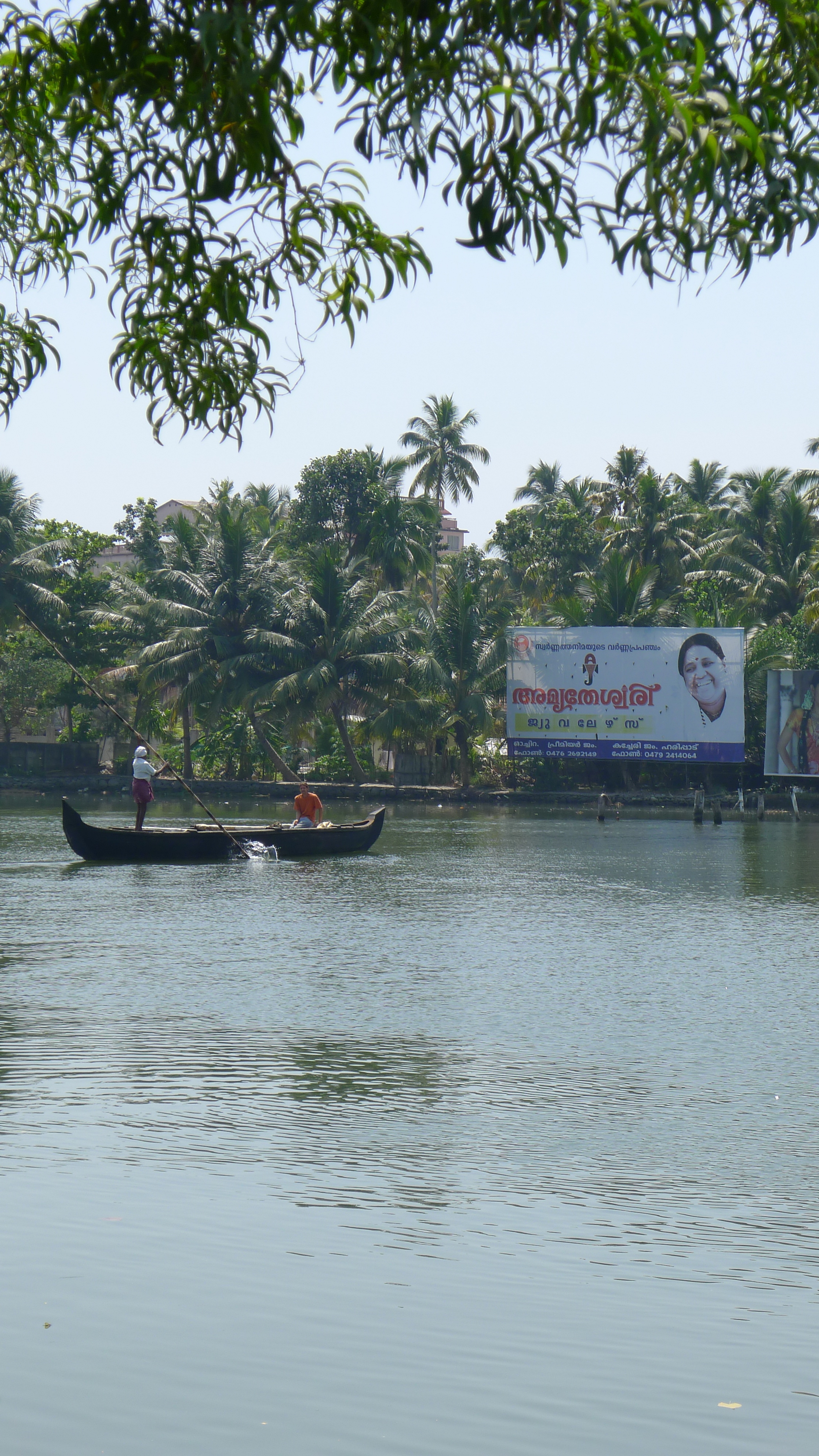 As we began our trek north from the southern tip of Kerala, we were planning to take a train up the coast to the backwaters at Alleppy. Fate, however, had a different plan. The night before our departure the train tickets didn’t come through, and we made a last minute decision to take the eight-hour ferryboat ride instead.
To break up the long boat journey, one of our now four-member group suggested that we stop half way and overnight at a well renowned ashram along the route. The Matha Amrithanandamayi Mission ashram is one of the few female run ashrams in India, has 2000 permanent residents, and is known for its international disaster relief work. Up to this point, I had never visited an ashram in India. If I wanted to mark that experience off my list, this was going to be a great place to do it. I decided to go along and try it out.
My first impression of the place – huge pinkish apartment buildings jutting out of the otherwise flat and palm tree lined landscape. Hmm.. This slowly manifested into a small pinkish city fully enclosed within its own crumbling walls. Walking through the grounds, the whole place seemed somewhat surreal and I was not quite as enchanted as I had hoped. But here we were, so onward we go. Within a few hours, rooms were assigned, an orientation was attended, clothing was changed, and that was it. We were part of the group.
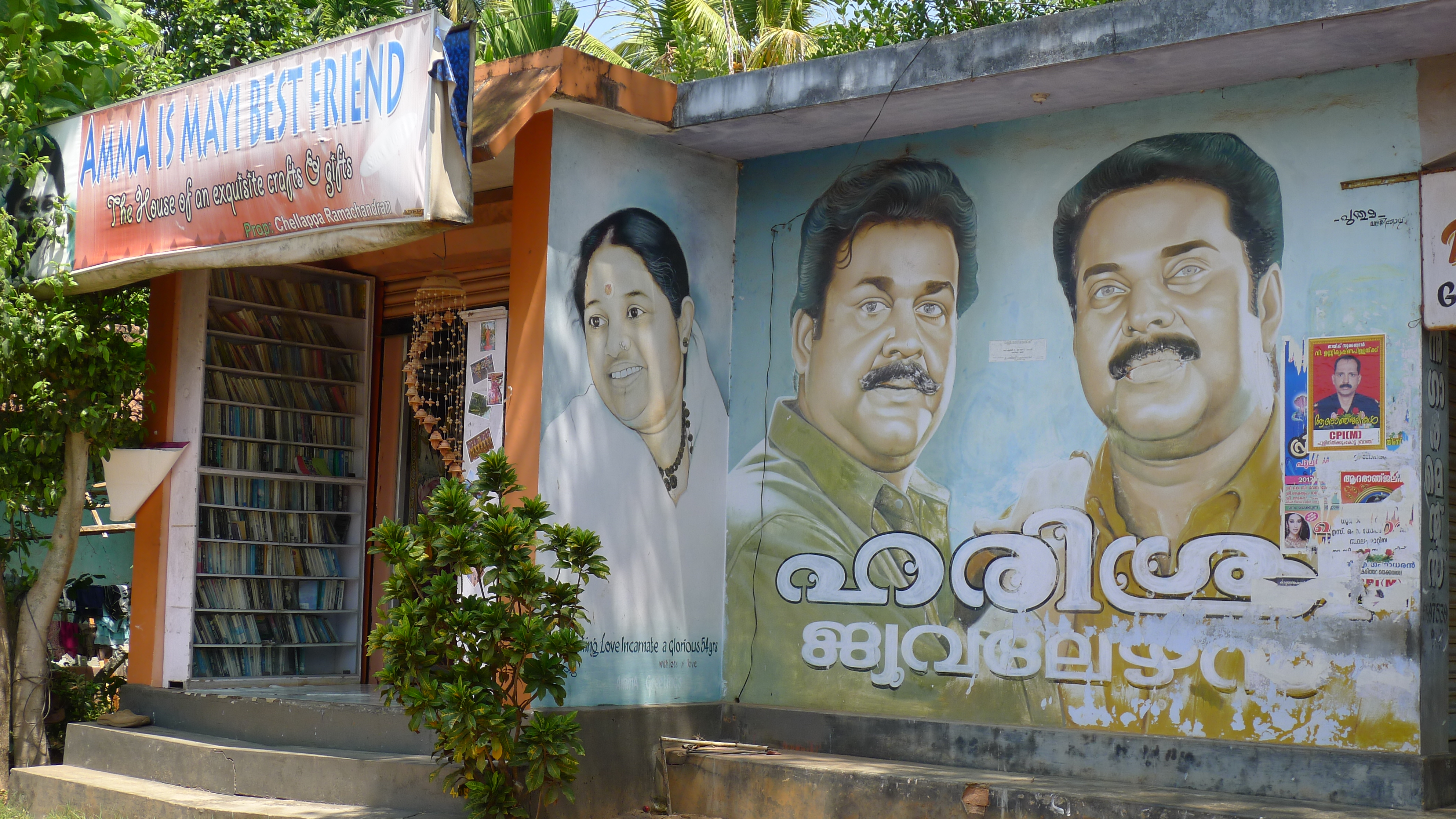
The early evening was spent in the ashram’s  “western café” listening to other religious seekers share stories about their time here. Apparently Amma, the Hugging Mother and ashram’s guru, became famous for selflessly giving away hugs to the distraught and inconsolable. I heard the two girls next to me discussing their own hug experiences with Amma. It went something like this: “How was it?” one asked. “It was… um… weird” the other responded. Even if I was lacking in enchantment before, I was definitely now at the least intrigued. Weird? How could something so natural and loving as a simple hug be weird?
We quickly learned that we were fortunate enough not only to be at the ashram at the same time as Amma, but to also be there on a day when hugging priority is given to those that just arrived or are just leaving the ashram. What does this all mean you might ask? It means that we were VIP’ed through the ticket line and quickly found ourselves waiting patiently on a packed stage in a line of squeaky plastic chairs for our own chance to receive a hug.
Slowly we scooted from one chair to the next, only stopping to read the plastic covered sheet listing rules and regulations and to wipe our face on the handkerchief provided. As I inched my way towards the front of the line, I watched follower after follower kneel before Amma and wait for her to embrace them. If my lack of enchantment had previously turned to intrigue, it now became an intense desire to flee. Unfortunately I was in the middle of a stage covered with what must have been 200 or so faithful followers and only one, now blocked by five new followers trying to fight their way onto the stage, exit.
Everyone but me seemed to be mesmerized by Amma’s presence. Was I the only person on that stage hyperventilating at my lack of a spiritual experience? I played out every scenario in my head and decided that escape was not an option. I resolved that I would take a few deep breaths and open myself to the experience. I knelt before Amma and leaned in for the embrace. Before I could process what exactly was going on, the woman to my right took my head and, with the confidence of someone who has done this thousands of times before, placed my left cheek square on Amma’s right bosom. Amma reached around, put her arm on my back, and leaned down to whisper into my ear. I stayed there for what felt like eternity but was in actuality only about 20 seconds.
As I walked off the stage, my husband came over and asked, “So. How was it?” All I could respond with was, “It was… umm… weird.”

This gallery contains 7 photos.
I am usually a proponent of sunsets, enjoying the last lingering light on the horizon that fades away into a blanket of stars and the promise of dinner conversations and new beginnings to come after the night. Sunrises don’t have the same effect for me, however in Kodaikanal (standing on the balcony at the Greenlands Youth Hostel), I have found the exception.
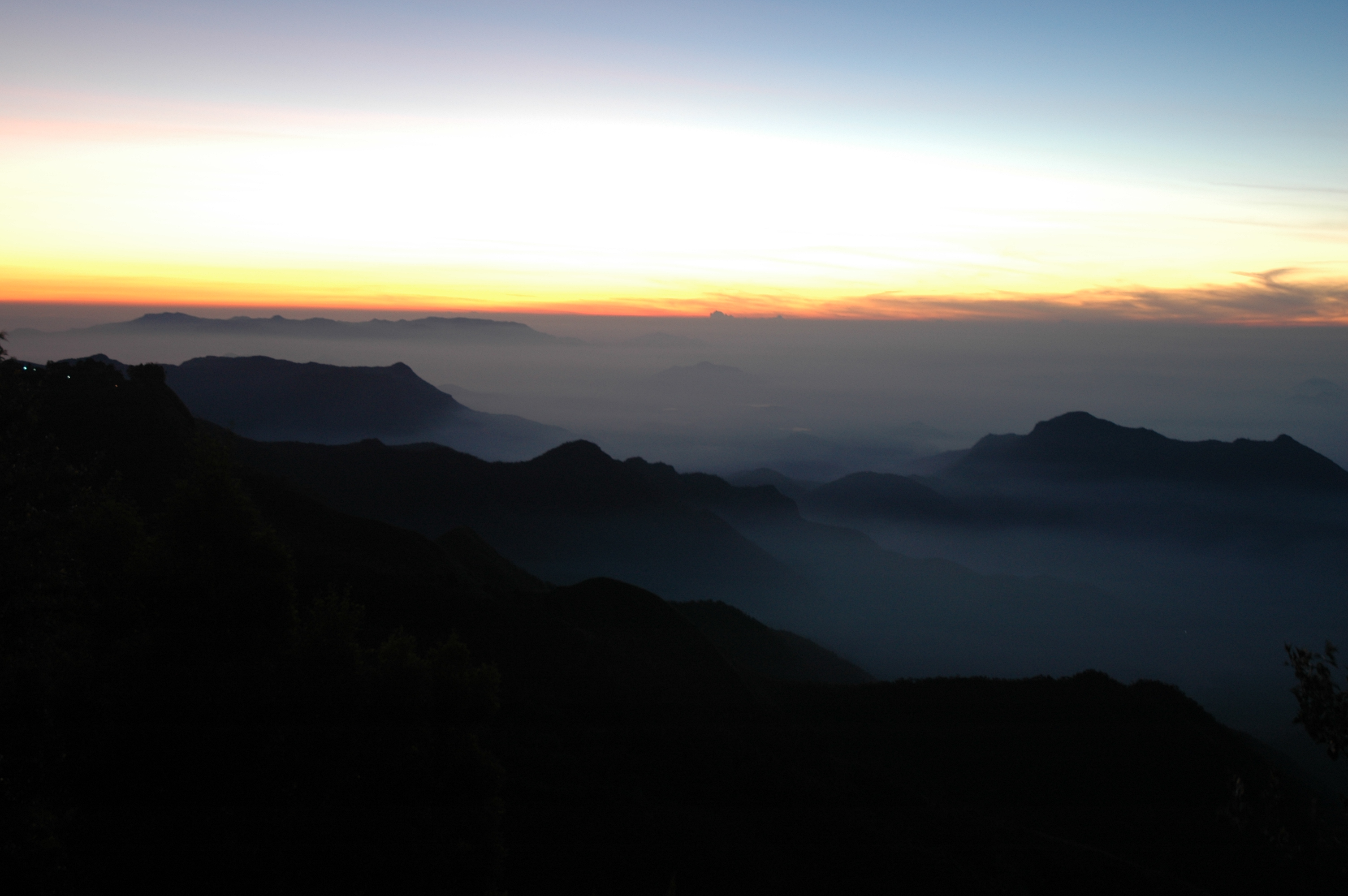
On a day with few clouds
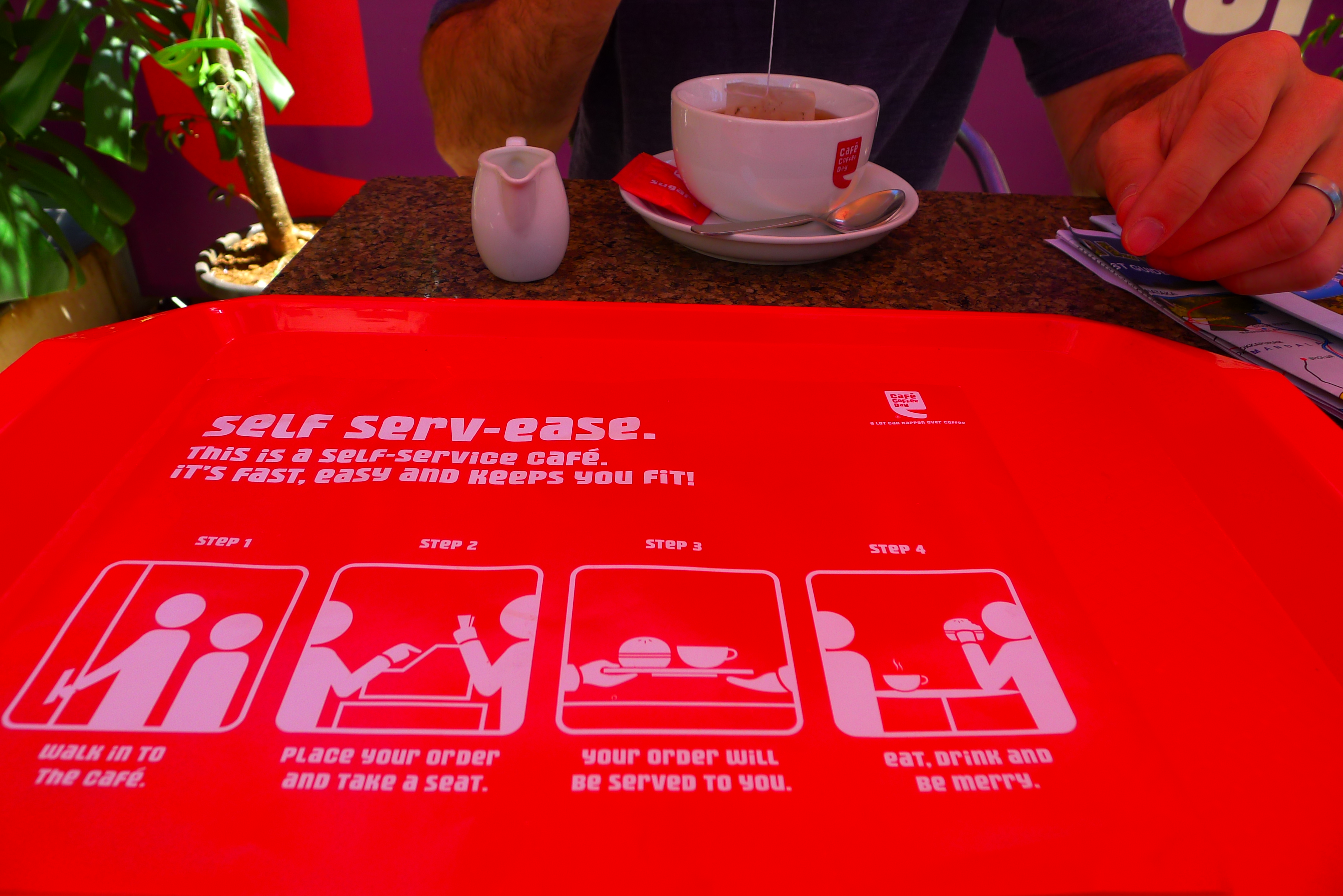
If that is all it took to be "fit", I could be in the Olympics!
This gallery contains 12 photos.
After our adventurous bus ride from Goa to Hampi, I was even more excited to be taking another bus from Mysore to the Western Ghat hill station of Ooty. Several people had told me the town was beautiful – the “queen” of the southern hill stations – and so I had hoped that what I was sure would be a long, nauseau filled day would be worth it.
The day started with a 30 minute late pickup (not too bad all things considered) and a soon to follow attempt to have us vacate our seats and move to the very back of the bus by claiming that where we happened to be sitting was somehow, magically, reserved. (By “reserved” they meant that a gaggle of young men were getting on the bus and apparently all wanted to sit together in the front – we must have looked like the easiest couple to displace) The attempt didn’t work, and we kept our windshield view.
An hour and a half into the trip we had gone a total of about 10km, which was apparently far enough to justify a chai (tea) stop. I obliged and took a 5 rupee (10 cent) cup of what seemed to liquid sugar with a shot of tea on top – delicious! Now, totally hyped up on my sugar and caffeine, I was ready to settle into my “reserved” seat, listen to some NPR podcasts, and enjoy the ride. My plan, however, was thwarted. Only 30 min (another 10km) later was breakfast — otherwise defined as a 20 min stop in a bus parking lot to grab some chips and more chai, and to watch the cows, people, and monkeys mingle amongst the dust and trash piles. Now doubly caffeinated, I was anxiously tapping my feet as we rolled along at what seemed to be a better clip, until (you guessed it!) stop number 3 at a whopping 2 and half hours (the whole trip was only suppose to be 3hrs) and maybe 30km (out of about 250km) into the trip. This time a silk store and (hold your surprise) chai stand were on the menu. Where we ever going to get there?
Another 30 minutes slowly passed until we all scuffled back onto the bus. This time, I hoped, maybe we would make some progress. And boy we did! From here on out it was as if we had entered a rally car race. We were cruising and swerving and honking up a storm. No more chai stops on this adventure! We were on our way. We passed through what was marked as a national park, but instead appeared to be more of a major trucking route than anything else. I saw my first “elephant crossing” sign. We stopped to check out a deer. And soon we were in the hills, white knuckled and core engaged while trying not to be thrown out of our seats as we made our way up 36 (they were numbered) hairpin turns. Not to worry because each had a reassuring center line (on what was probably only an 8ft wide road) and a posted reminder about the emergency number for the closest ambulance service.
Luckily, we made it all the way to Ooty and found a small oasis at the YWCA up the hill from the bus stand. In the end Ooty itself was intruiging, but it wasn’t everything I’d dreamt of (I kept walking around asking “beautiful”?). At least it was an adventure, and, even more than beauty, I think that is what I need right now.


This gallery contains 9 photos.
Mysore is a city of yoga and spirituality. Having just finished my yoga training, I am sure that you could imagine my excitement at getting into the yoga scene here – instead I was quickly distracted by something that to me is just as interesting, the silk scene.
This is one of the several places in India where there is a long history of silk production. You can see it everywhere, in the advertisements, the stores, the saris the ladies are wearing as they do their afternoon shopping down the street. Silk seems to be woven into the culture here as surely as the strings of jasmine are woven into every woman’s hair.
Silk production in Mysore is controlled by the government, which means that if you want to see the process you have to go to a government facility – so, government facility, here we come.
Most of the silk worked in this area is mulberry silk, 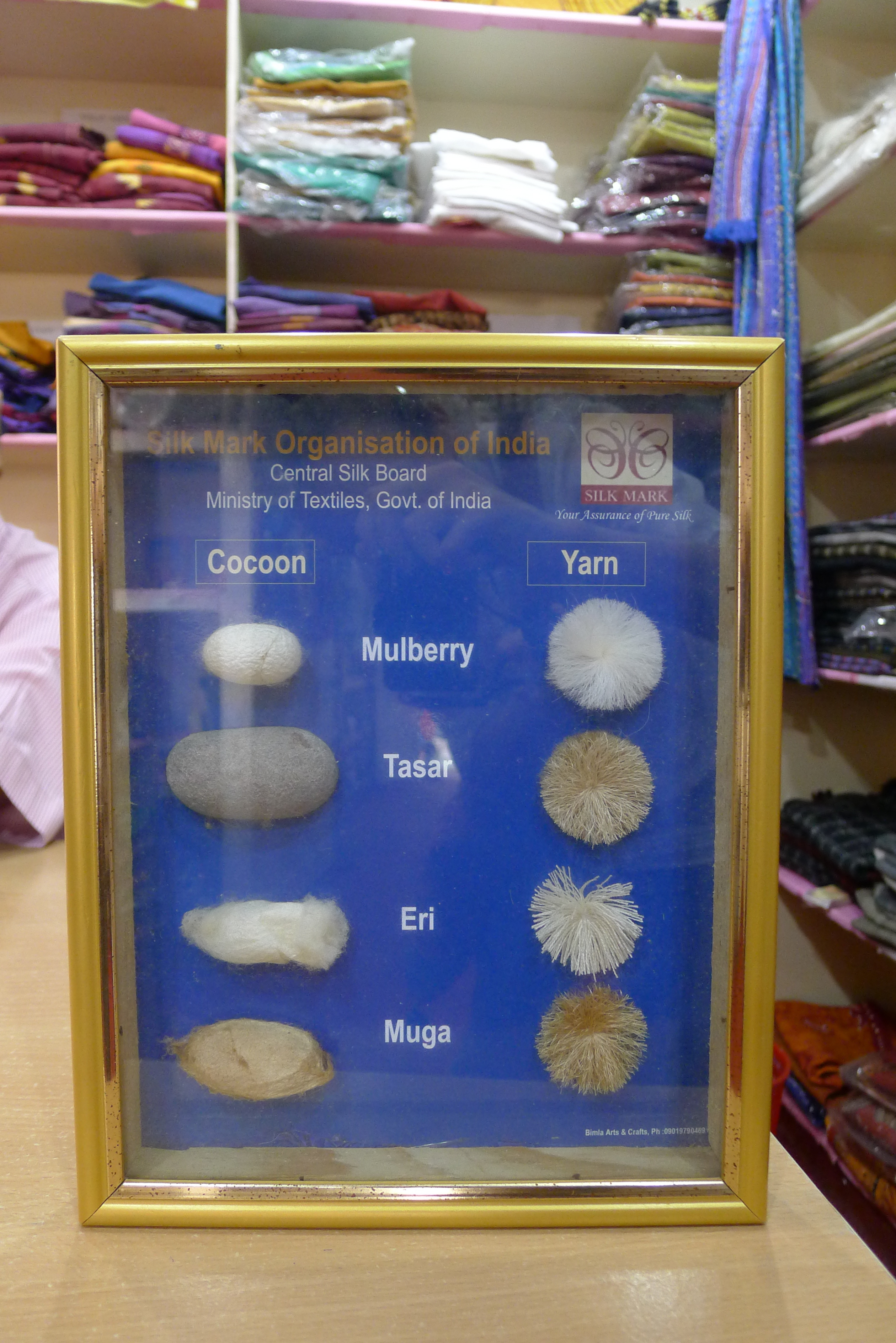 which is a strong, fairly white variety of silk with a longer staple (fiber length). The initial phases (and probably the most interesting parts) of the process are off limits, but the spinning and weaving are open for tours. Unlike silk production in some parts of the country, everything here is done by machine. As we walked into the spinning room, we were greeted by huge spinning machines and the whirl of pink (S twist) and green (Z twist) threads flying onto multicolored plastic spools. Speckled among the machines are women in beautiful blue floral saris slowly making their way around to see that everything is in order.
Making our way into the weaving center, the dynamic totally changed. The thumping of heddles in the old Swiss and Japanese machines was deafening, and the beautifully dressed women are gone. Wooden pegboards are fed through the looms telling the heddles when to lift and lower to make the appropriate pattern. Hanging off the end of almost ever loom is a dirty button up shirt. And watching over the flying shuttles is a man on a stool. Weaving is a man’s world apparently, perhaps because they aren’t required to wear the cumbersome 6 meters of fabric a sari encompasses and can therefore easily bend over the loom.
Even if walking through the factory could make us feel like we were back in England during the industrial revolution (or for me, back in undergrad), the gods won’t let us forget that we are in fact in the southern subcontinent. Watching over the whole operation is a myriad of Hindu gods. Each wall has its own image, and each image is surrounded by a string of flowers and blinking lights.
Only in India.
 wanderfull365