
By throwing his feet in the air and rolling on his back in a dusty rock pile, of course!

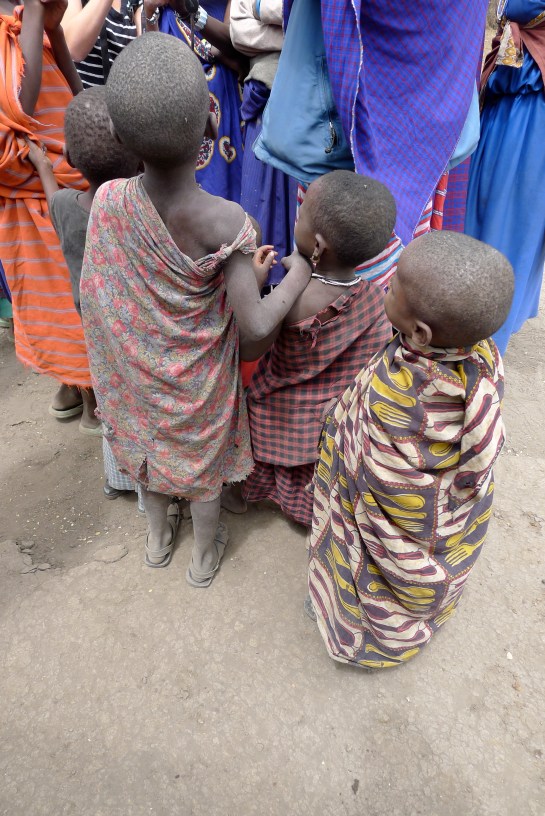
This gallery contains 17 photos.
Close your eyes and just think about the word “Serengeti” – what do you come up with? Images of savannah. The sound of lions and wind in the grass. Sun. Never ending sky. Idyllic, primal Africa.
The Maasai named the area of vast grasslands between Tanzania and Kenya “serengit”, or “endless plains” in the Maa language. For generations they hunted, herded, and lived on this land that is now home to a never-ending flow of tan and green Land Cruisers. For generations foreigners have been coming here to find something that is distinctly human – the romance of being at the mercy of nature and a sense of smallness. Of insignificance.
Here no one is the king. Death can lurk in any corner. In any minute.
As I watch the sun set over the plains, I feel the eyes staring back me from the grass. I can hear the life happening in the trees around me and miles away. We sit down to dinner and allow the china and crystal to distract us from what is going on all around us in these endless plains. It is not just dinnertime for us.
All Serengeti camps light fires in the evening. This creates a certain sense of security, but as I zip up my tent in the dark, knowing that nothing lies between me and wilderness but a canvas sheet, I can’t help but feel a little more alive than I did when I left my hotel this morning. I can’t help but feel small.

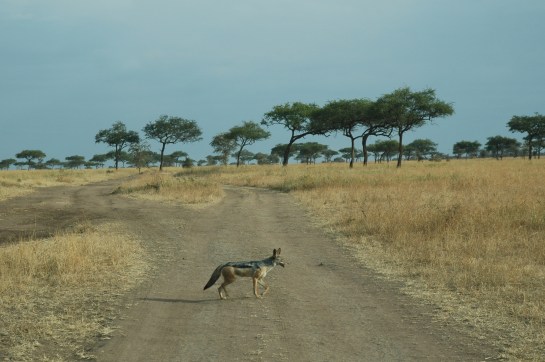
This gallery contains 12 photos.
I have a love-hate relationship with taking public transport while traveling. I believe it to be one of the best ways to get to know a place and a people, but it can also be one of the most exhausting travel experiences. Here is a perfect example.
Imagine the excitement of going somewhere totally new – in this case a small town with UNESCO Heritage Site ruins on the east African coast – that giddy feeling that keeps you up until midnight packing and then wakes you up at 4am to get on the road. That was me on our way to Kiswani. I was pumped, stoked, ready to go. So much so that when our taxi pulled into the Ubungo bus stand at 5.15am, I hardly noticed the chaos unfolding around me. I was oblivious, thinking this was a totally controllable situation just like any other I had encountered in South Asia.
Then I had the sudden realization that I had been swallowed whole. Hundreds of buses were everywhere, only inches apart and slowly creeping in one direction or another. People were everywhere. Travelers with bags and babies in their arms and vendors with bags of sliced white bread balancing on their heads swarmed around like a tsunami hitting the shore. Swahili, sweat and bus exhaust created a cloud in the air so thick that you could choke on it.

Rolling out of the bus stand into rush hour.
Somehow (ok, I know how – it was thanks to our taxi driver’s beautiful maneuvering), we ended up at our bus. After a spat over whether to pay for luggage or not and then another over whether our bus was going to right place or not, we found our places. We snuggled into the worn velour seats, thankful that we hadn’t ended up in or behind the row sitting unbolted, directly on the bus floor. I squished against the dirty window so that my husband could get one and a half of his shoulder blades onto the seatback obviously made for someone only 10” wide. He offered me a sip of water to wash down the gallons of inhaled bus exhaust and I cringed, already dreading the 7 hours between now and the only bathroom break in the trip’s itinerary.
Determined to make the most the experience, I crammed open the window, stuck my head out like a puppy dog and popped in an earphone to listen to my favorite NPR podcast. An hour later we rolled out of the parking lot and crawled through Dar’s morning rush hour. 3 hours and 2 stops later, we pulled out of another parking lot and at last entered territory that didn’t look familiar. “Finally!” I thought. We had to be on our way.
I closed my eyes, confident that we’d be there in a snap. I was certain that we were almost there when I heard a, “You have got to be kidding me!” to my right. (By this point my husband was at his wits’ end, having been caressed by countless bums and bellies, sticky with sweat and swinging bags behind at eye level as they made their way through the aisle) My eyes flew open and I could not believe what I saw.
A wall of bus offices welcomed us as we turned left into a parking lot. Bus offices we had visited the day before to buy tickets. We drove into the empty parking lot, so different from the one we had left 4 hours previous and yet still the exact same. 4 hours into my first bus ride in Tanzania and I had gone nowhere. 4 hours of crammed, sweaty, dehydrated morning and we back to where we had begun.
I pulled myself out of the seat and down the aisle. We pulled our bags out of the bus. As we hailed a taxi I laughed. Friends in Senegal had told me that if nothing else, sub-Saharan Africa would teach you the value of patience. But patience is only part of it. Sub-Saharan Africa will teach you the beauty of having a plan B.

Back at the bus stand.

This gallery contains 4 photos.
A lazy afternoon in the costal Tanzanian town of Bagamoyo unexpectedly turned into a religious experience like none other I have had before. Biking along on the outskirts of town we came across the old Catholic church (apparently the first in Eastern Africa and a springboard for the anti-slavery movement). Curious, we parked and ventured inside through one of the slightly ajar side doors. Inside we found:
A young man playing Celine Dion on an electric organ with a beat box background
A bright green-turquoise, yellow, and white color scheme
A nativity set tucked on a shelf under the stairs so that Joseph teetered right at eye level, threatening to jump off the shelf at any second
Two dusty cupboards with random pieces of old textiles
Innumerable benches that were only 6” in depth and with hollow backs so that if you slouched you would fall completely through to the floor behind
A brightly colored painting over the alter – clearly master artisans were not deemed necessary to call in – it seemed as if scaffolding had been set up and the town’s children were given paintbrushes and free reign
A dozen stained glass windows designed so that the center third could have built in wooden shutters
Algea coated bowls of holy water at each door
Check out the following photos for a visual:
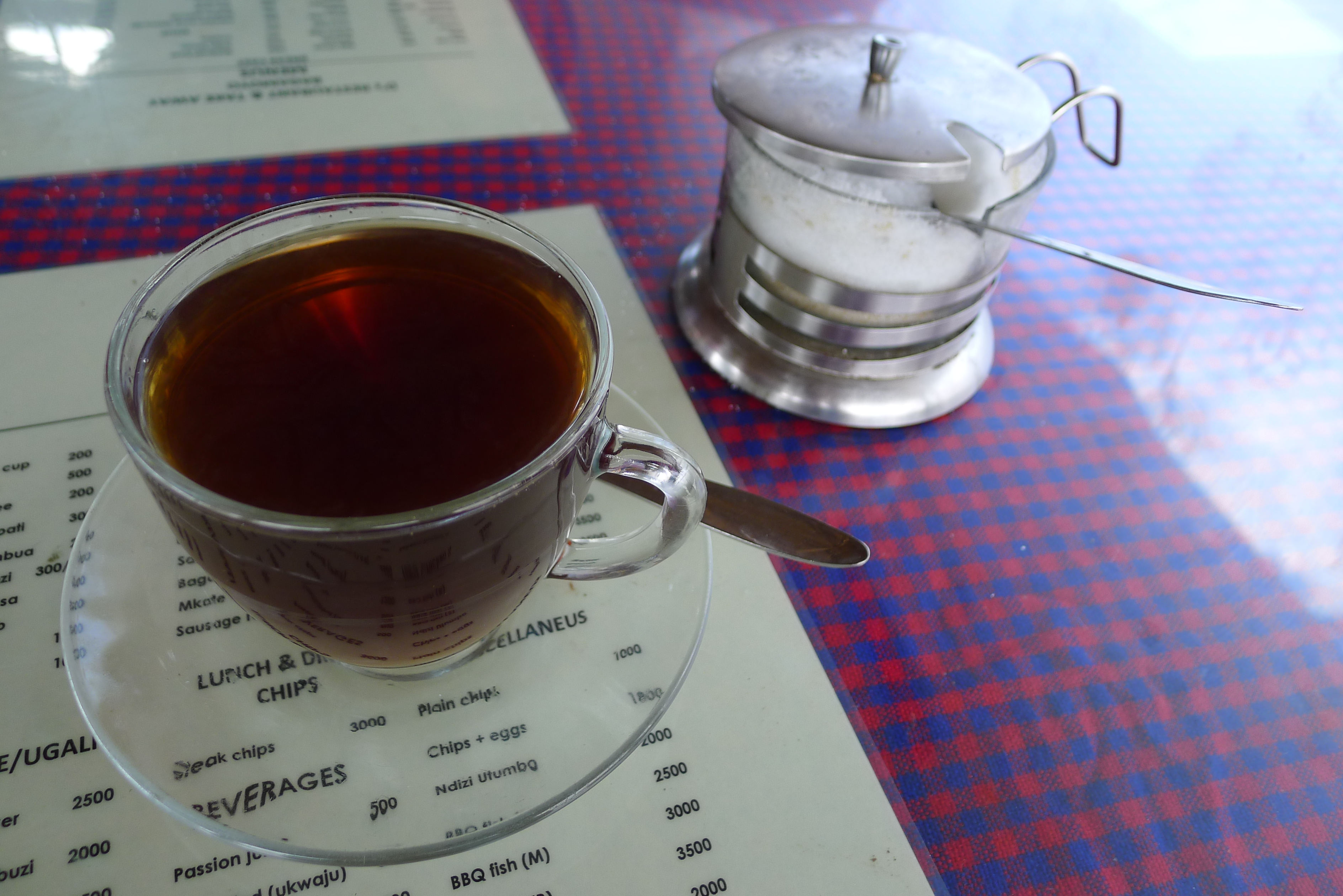
1. Prepare a lightly spiced, unsweetened black tea and pour immediately into large thermos for storage
2. Gather clear glass teacup and saucer (ensuring cup is upside-down on saucer) and sugar bowl
3. Present glass, sugar, and thermos of hot tea to the table
4. Place sugar bowl off to the side and unflip the glass teacup
5. Open thermos and pour steaming tea into glass teacup
I have always had a love for art and for the people that can create experiences, images, or ideas that evoke passion, inspiration, or just simple introspective thought. As a teenager I used to stare at Monet’s paintings in a book, wondering how one man can place simple dabs of color on a plain cotton canvas in a way that still speaks to so many people. Today I often put on a piece of handmade jewelry and feel lightened knowing that the person that made it saw something beautiful in the most basic of materials that existed before the piece was formed.
As I travel, I find that I seek out artists and artisans almost subconsciously. I am drawn to them in a way that even I cannot define. After traveling through almost 40 countries, I have come to see them a microcosm of the best parts of each society. So much hope can be wrapped up in one smiling face of a teenager who couldn’t finish school but learned to work with silver as a way to feed himself. So much culture and tradition can be carried in one carpet knot, one throw of a shuttle across a warp, or one stroke of paintbrush on fabric.
Artisans, to me, encompass all of the best things about work. They work because they need to support themselves but also because they love what they do; because they can simultaneously see their past and their future in what they create. Few other workers are as proud, as driven, or as dignified as an artisan. Few other people are as open and quick to share what they know with others.
With my year on the road coming to an end, one on the many lessons that I hope to carry with me is to live less like an employee and more like an artisan. I too want to be generous with my wisdom, innovative in my thinking, scrupulous with my time, and so dedicated to my craft that others will be inspired to take up their own. Whatever comes next, I too want to live like an artisan.
The Sufi Muslims in Senegal have a strong belief in the importance of giving alms every day. It doesn’t have to be much, but at least a token offering to someone less well off than you. I have always believed that charity was a fundamental good. However, I know that the one thing that can change lives more than anything else is empowerment through dignified work.
Being here, I began to wonder if I would be a bad Muslim. Would I hand someone 500 CFA just because they ask? No — a banana, orange, or apple maybe, but cash, no. I’ve seen too many examples of how small change can corrupt and create a cycle of poverty that is unbreakable, especially for the children involved. Throughout my own life experience, I have only ever seen a handout (few extreme exceptions aside) disempower. An exchange, on the other hand, I have seen empower beyond measure. An exchange proves to both parties that they have something of worth to offer.
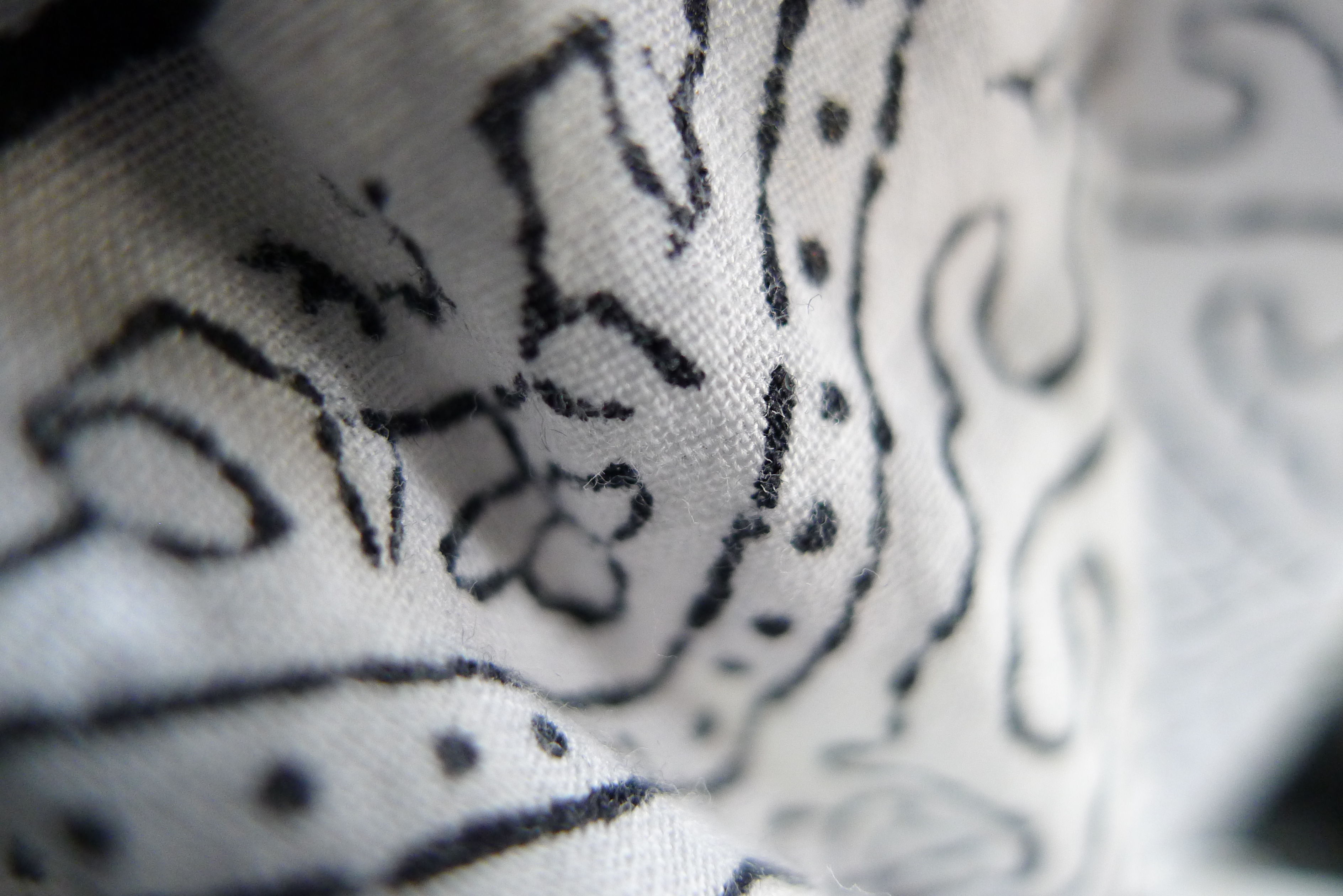
As I get ready to leave Senegal, I think about this as I realize how much I have collected here. My pack is suddenly bursting at the seams, filled with objects that I never knew I wanted. Necklaces and bracelets I will never wear spill out of new batik jewelry bags. Tie-dye fabrics need to be folded and refolded to fit properly into the remaining crevasses. Looking down at all of these items, most of which I know I paid too much for, I realize the joke is one me. Senegal’s sea of endless entrepreneurs has won me over. I didn’t think twice about the 5000 CFA piece of fabric, the 3000 CFA necklace, or a 2000 CFA contribution for a beach mat, because each time I exchanged money for goods, I gained a conversation and the seller gained resources and capacity.
I look down at my bag again, packed and so much heavier than it was when I got here. I take note and think, perhaps, in my own way, I actually have been giving alms all along.
 wanderfull365