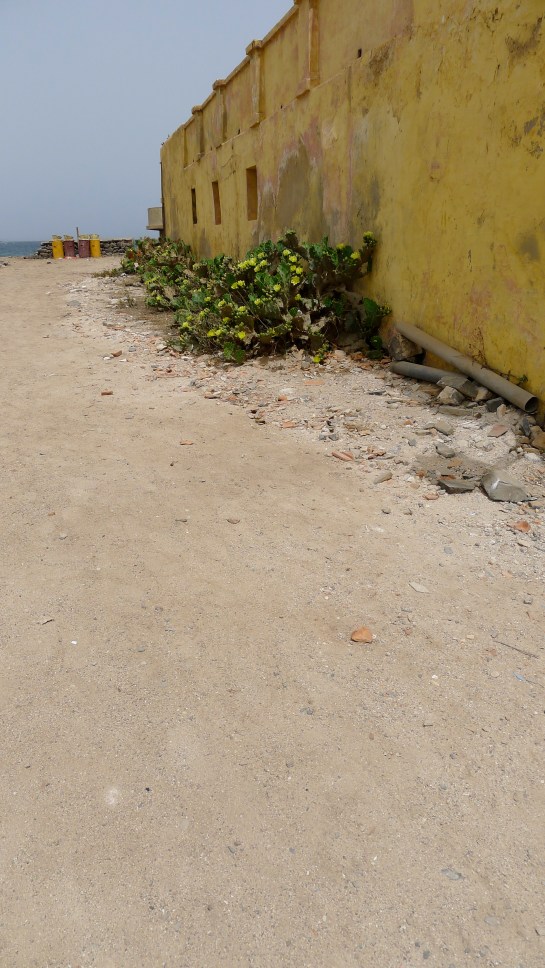
This gallery contains 20 photos.

This gallery contains 20 photos.
A must do in Dakar is the Ile de Goree – a small, romantically crumbling island off the coast that is eerily charming considering its dark history. For hundreds of years this was a shipping point for the African slave trade in Western Africa. Africans would be brought from the interior to this island to be packed up and shipped off to the West as if they were salted fish or peanuts. An amazing percentage, as much as 50% (according to the island museum) of the people captured as slaves never made it to the auction blocks in West.
A part of my own family owned and used slaves before the American Civil War. Knowing this fact made me strangely apprehensive as I stepped off the boat and onto the island. It was as if I thought the people here would be able to sense my family’s history in the air around me. As if I thought they might hold me responsible for something in a past that I am connected to but took no part in. What I didn’t realize is that the day had something else in store for me, something even more interesting than a discussion about family pasts.
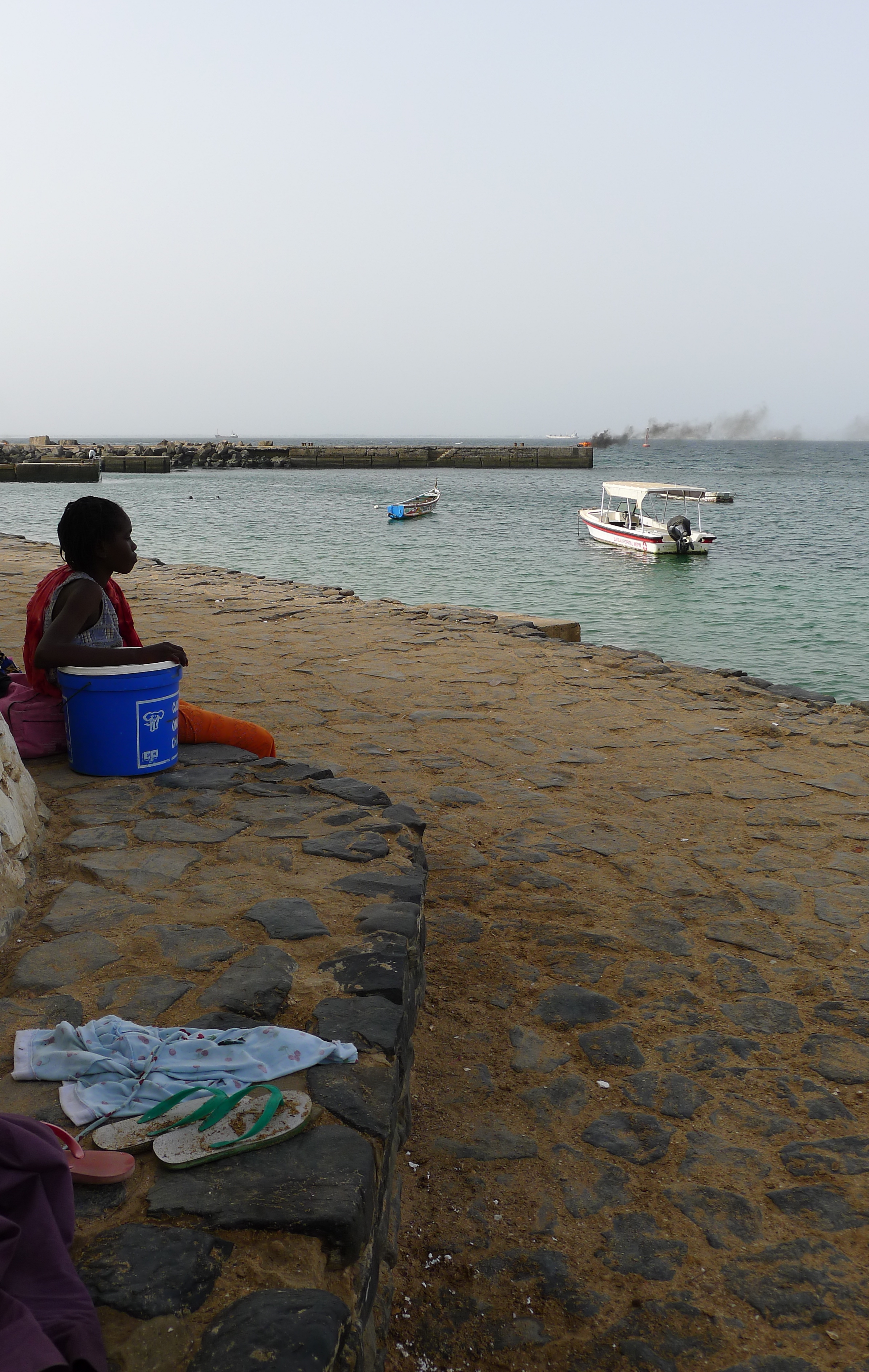
A fire burning off the end of a pier as we wait for the ferry to arrive.
The day was wrapping up and we decided to walk back to pier to see about the 4.30pm ferryboat. Several friends in Dakar had commented on the precision and efficiency of the ferry system, so when we arrived at the pier and there was no boat, our assumption was that the boat had been early. As we sat along the beach, 6pm turned to 7pm and three supposed ferry times had passed. Masses of people were in the water swimming and a similar masses were piling onto the two piers to start bonfires of palm leaves and plastic chairs – “an offering for rain,” as it was described to me by a young lady selling jewelry. “Hmm,” I thought, “civil discontent turning into acid rain perhaps.”
Finally a little before 8pm, a boat appeared on the horizon. Hysteria ensued as the hundreds of people saw this as their only opportunity to get back to Dakar. The gates to the small pier were pushed open and people ran out to boat as if the history of this island made it an impossible place to pass the night.
So many people were pouring onto the pier that those on the boat had no way to get off. The small wobbly railings lining the pier shook and bent under the pressure of so many people. The pushing, shoving, and screaming were so intense that they could only be broken by the sudden burning sensation of pepper spray in the air. Everyone ran towards the beach and stones began flying through the air. We backed up behind the stone throwers, covered our faces with whatever we had, and watched the chaos unfold.
Now night and the overcrowded ferry gone, we sat again by beach wondering if we would be staying until tomorrow. I called my friend in Dakar to let her know we might not be back. As I described the scene, she was shocked. “I have never heard of that happening on Goree,” she said. “It is usually so quiet and calm.” I guess I have a way of bringing out the best in places.
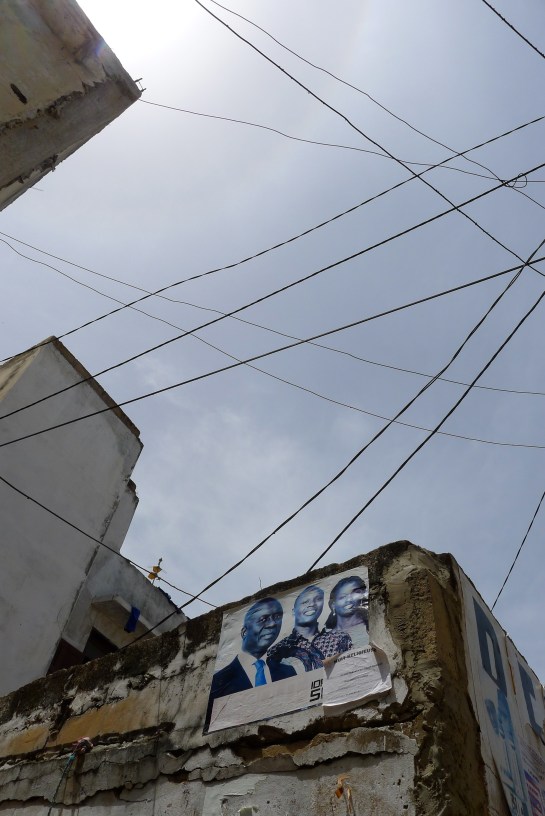
This gallery contains 20 photos.
Dakar – how different this city must seem if you come at it from the West instead of from the East. What would seem dirty and chaotic strikes me instead as refined and calm. The wide streets seem to welcome the blue sky. The cement houses reach out to a never-ending horizon over the ocean instead of wall of mountains or sea of sand. The smell of masala, sewage and chai is replaced with fish, sweat and salt. The colors of temples and saris replaced with blue sky, white sand, and batik fabrics.
This is a place that is so familiar but unlike any other that I have been to – a fact that quickly becomes obvious in everything I do. The people look American, but somehow different. The language I know, but only part of the time. This water I have touched, but only from the other side.
Days go by here and I wonder, how can I feel like I know a place and yet not know it at the same time? I have never been to Senegal, and yet something about it is so familiar. Is it New York or New Delhi that I am reminded of being in Dakar? How many days will it take for this to feel like “normal” or to finally feel completely different? I don’t know, but I think that when it does, it will be time for me to go.
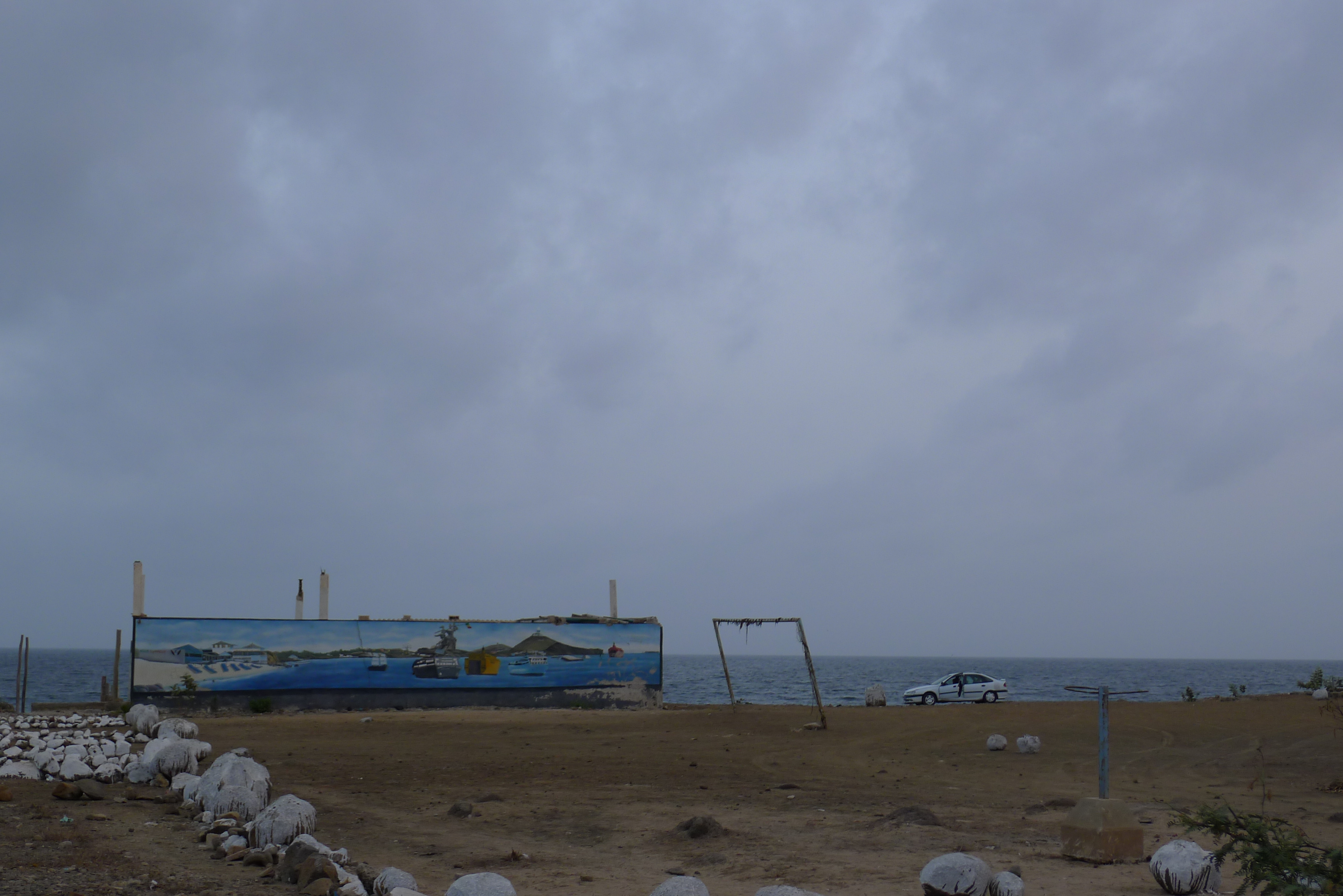
A mural of the Dakar coast line painted on a wall along the beach.
Finally, after almost 7 months in Asia, (India, Nepal, and Vietnam) I am off to someplace new – a place with desert and rainforest, Wolof and French, relative calm but growing economic disparity.
Senegal.
Africa itself isn’t new to me. I have been to Egypt 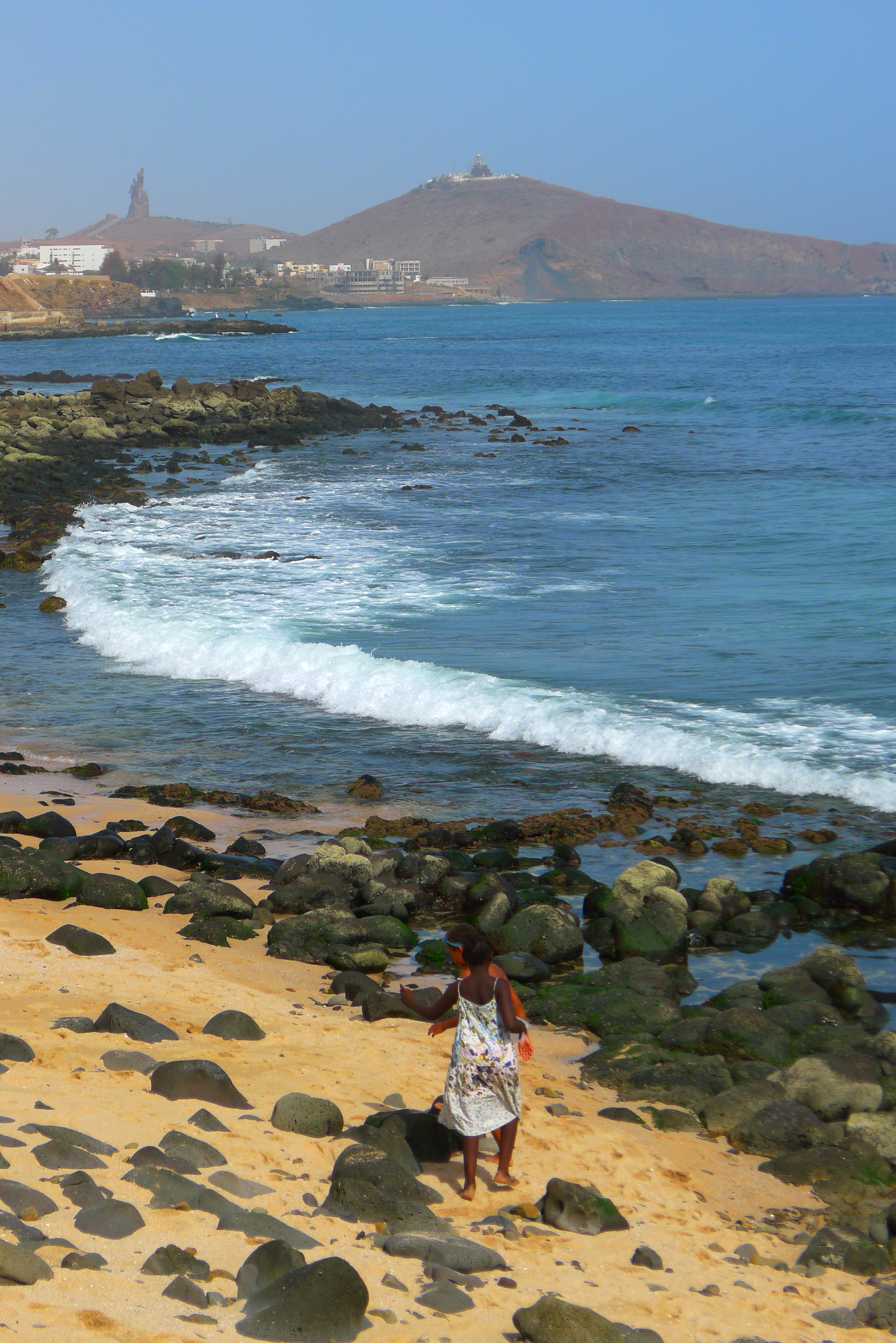 twice and my Sicilian friends in Siracusa would have considered the 6 months I spent in the southeastern corner of the island as more legitimately African then European. But being in and below the Sahel, that is new to me and deliciously unlike anything I have encountered before.
The food, the aromas, the people… I have no idea what to even expect. I am trying to expect nothing, hoping that no expectations will allow me to absorb and figure out the place more quickly. Luckily I have friends here. Friends that can make up for the lack familiarity and make the place feel like home even before I have arrived.
Senegal – I have wanted to meet you for years. I am ready for something new, and you fit the bill to a tee. Hopefully we will get along just swimmingly.
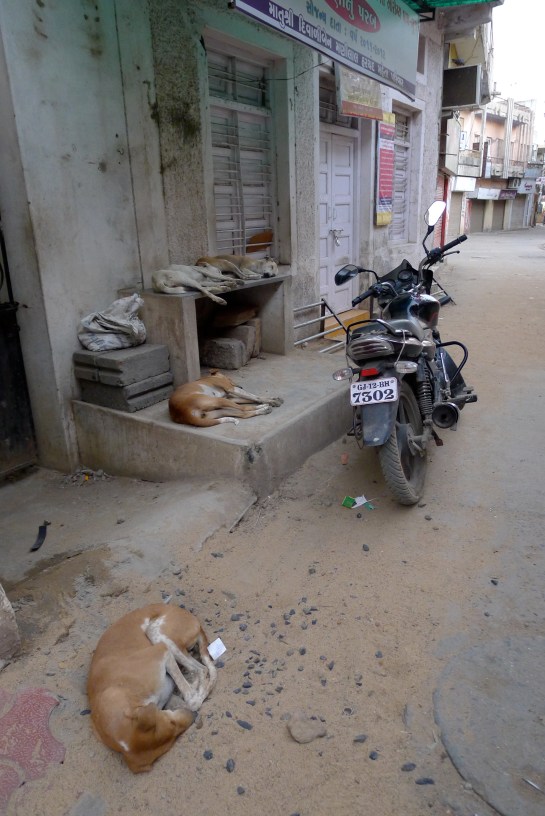
This gallery contains 10 photos.
If beautiful handmade products are your thing,

Embroidery artisans doing initial sketches at a design school in Gujarat.
there is no place to be like Gujarat. Art and embellishment are everywhere — in the markets, on the women, and laid out on the front porches. There are numerous traditions in Gujarat: tie dye, embroidery, printing, weaving, copper bells, lacquer, woodcarving, and jewelry.
I am personally partial to the textiles, which are amazing in this part of the country. Delicate mirror work, labor-intensive tie dye, block printing, and painstakingly counted embroidery are staples. For full access to the amazing artisans producing this work, the only requirement is an 8-hour train ride to the end of the line and the desert town of Bhuj.
As you step off the train, it is almost as if you’ve been transported back in time to the Wild West. People here eek out a living in a mostly inhospitable climate and hold strong to their traditions. This is a region torn apart time and again by politics and religious conflict, and yet as soon as you enter the villages you would have no idea. Temples and mosques are as close and intertwined as the Muslim and Hindu neighborhoods they serve. Hindu embroiders work on cloth tie dyed by Muslim artisans, and copper bells and woodcarvings are sold to and used by both.
The best of the artisans here make their living by cleverly joining innovation and tradition. They use their art as a way to interact with, tell stories to, and enchant Indian and international consumers alike, while holding strong to techniques and forms that have been passed down through families for generations. The combination creates something that is authentic and unique.
This, to me, is art at its best.

The initial stage of tie dying – setting the pattern.

A sari covered in thousands of tiny blue knots, ready to be dyed – next to it, a completed piece in green and yellow.

It was towards the very end of my one week trip in Vietnam. I was coming back late at night from Hanoi for one more day in Ho Chi Minh City, when it happened. For a week I had been marveling at the way the car drivers and scooter steerers had created a kind of musical movement on the road. Everyone was constantly swerving and swarming in every which direction, and not once had I seen an accident. Not even a tap with a side mirror. This late night trip home made up for it.
At night, the trucks are allowed to enter Ho Chi Minh. I was noting this coming off the highway because trucks on the road was such an unusual sight. The bridges were usually packed with scooters and taxis. Tonight only trucks and myself.
Coming around a turn, there it was. A dark empty road. A tipped black vespa. A truck parked on the curb with the driver on the phone. And in the middle of the road, one woman. The contents of her person were spilled all over the pavement next to the contents of her purse. The ambulance was a long ways off, if it was coming at all.
Unfortunately the most shocking part of all this might have been the conversation I had the next morning with a friend living in Ho Chi Minh. As I relayed the story, she stopped me. “Did it look like the truck hit her going forward or backward?” I stared blankly. I had already told her the truck was in front of the scooter… Why would a truck REVERSE over someone and then pull back up in front?!
I couldn’t wrap my mind around it, but my friend already knew why.
In Vietnam there is a law stipulating compensation  structures for scooter accidents, and I can see why they thought this was a good idea given the large numbers of scooters on the road. The catch is this: if a scooter is hit by a car/truck and there is a death, the car/truck driver is required to pay the family a one-time lump sum. If a scooter is hit by a car/truck and there is only an injury, say a lost limb or brain damage, the car/truck driver is required to pay the family compensation in installments, for life. Any behavioral economists (or just a rational person for that matter) reading this will already know where I am going. …As soon as this law came into effect, there was a spike in fatal accidents. Not because the accidents were getting worse, but because car/truck drivers were making sure they wouldn’t be stuck with lifelong payments. They began hitting the victims again, in forward or reverse, to make sure they were dead.
Turning accidents into murders. That is the power of incentives.
And hence, the questions I couldn’t answer: How many times does a person need to be run over to be in the state I saw? Was the girl I saw accidentally killed or purposefully murdered?
The one thing I do know is, that I will never know.
—
Note: All data in this post was collected from personal interviews. If you have any personal experience with this or relevant reading, please share so that we can make the information here as accurate as possible.

This gallery contains 15 photos.
 wanderfull365